Indian agriculture is presently confronting challenges related to climate change, environmental degradation, and stagnant farm incomes. Traditionally, input-intensive crops, such as the rice-wheat rotation system, have been the mainstay of Indian agriculture. This has resulted in declining groundwater tables, soil erosion, and increased production risks. In this context, crop diversification has been a positive factor for the sustainability and resilience of the farming system. This chapter explores the prospects for maize cultivation as a strategy for crop diversification in the Indian farming system. The environmental benefits of maize cultivation, coupled with the high and differentiated demand for the crop, provide a strong rationale for the strategy. Drawing on the broader literature on the impact of technological change on the farming system, the chapter also aims to demonstrate the importance of hybrid maize technology for increasing productivity and enhancing the welfare of the farming community. The chapter concludes by asserting the prospects for the crop diversification strategy, grounded in maize cultivation, for the long-term sustainability of the farming system.
Similar articles
- IMPACT OF LANGUAGE PROFICIENCY ON ACADEMIC PERFORMANCE AMONG INTERNATIONAL STUDENTS IN DELHI NCR, INDIA
- Sustainability and Green Management
- IndiGo Airlines: Market Dominance, Business Model, and Evolution of Civil Aviation Regulatory Framework
- Blood Bank Management System and Donation Tracking
- COMPARATIVE ANALYSIS OF HEALTHCARE SYSTEMS IN DEVELOPED (USA) AND DEVELOPING COUNTRIES (INDIA).
Abstract
1. Introduction
Indian agriculture is currently undergoing complex change driven by ecological stress, economic pressures, and rigidities in the system. Although agriculture employs the most people, the sector is experiencing declining profitability and rising input costs. In addition, the sector is more vulnerable to the effects of climate change.
The continued use of the rice-wheat system can be attributed to the historically embedded path of development driven by the Green Revolution. This system played a crucial role in achieving self-sufficiency; however, it has become unsustainable over the years (Pingali, 2012). With increased irrigation water use over the years, alarming groundwater depletion has been observed, especially in the north-western states of Punjab and Haryana (Rodell et al., 2009). In addition, the overuse of chemical fertilizers and practices such as crop residue burning have resulted in soil degradation and environmental pollution.
Climate change has further complicated the situation by increasing production-related uncertainty. With rising temperatures and irregular rainfall patterns, the situation has become more vulnerable (Intergovernmental Panel on Climate Change [IPCC], 2022).
In response to this phenomenon, crop diversification has emerged as a key factor in ensuring agricultural resilience and sustainability. Crop diversification, however, is not just a technical process; rather, it is closely linked to economic and institutional factors. Farmers are often locked in conventional farming systems due to assured procurement and established market linkages (Birthal et al., 2015). Thus, the key lies in identifying crops that address environmental stress, income stability, and market demand simultaneously.
This chapter proposes that maize can be a viable strategic alternative due to its ecological efficiency, market potential, and compatibility with hybrid technology.
2. Crop Diversification: Conceptual and Policy Context
Crop diversification has thus been a strategy that has played an economic and ecological role. From an economic point of view, crop diversification has helped reduce income variability by spreading the risks involved in farming different crops (Ellis, 2000). This is particularly essential in the face of increased climatic variability.
From an ecological perspective, crop diversification has enhanced biodiversity, thereby promoting ecological services. In this regard, Lin (2011) argues that diversification in crop farming is a stable system that is resistant to environmental shocks. In a similar vein, Pretty et al. (2018) argue that crop diversification is a critical component of sustainable intensification, which aims to increase crop intensity without harming the environment.
Crop diversification also has implications for income and nutrition, in addition to its ecological role. Empirical evidence suggests that crop diversification, particularly in crops that are highly valued, has the potential to increase income (Birthal et al., 2015; Jones et al., 2014). However, crop diversification is also influenced by institutional factors.
In India, the minimum support price (MSP) system has traditionally emphasized rice and wheat; therefore, incentives to grow these crops have been high (Chand, 2017). Inadequate market infrastructure and price volatility for other crops have been major hindrances to farmers' diversification, leading to rigid cropping patterns over the years.
To address the aforementioned constraints, the policy environment must be altered to encourage diversification. This can be done by providing better market access and technological support to improve the productivity of other crops, such as maize.
3. Maize as a Strategic Diversification Crop
3.1 Production Trends and Agronomic Suitability
Maize is increasingly being recognized as an important crop of India's evolving agri-food system. This is evident from the fact that, although India is among the major maize producers, it lags behind other major producers such as the United States and China in productivity (Food and Agriculture Organization [FAO], 2021). This indicates significant room for improvement, especially in seed technology, inputs, and management.
A special feature of maize cultivation in India is that it is grown across diverse agroclimatic conditions. Unlike other major foodgrains like rice and wheat, which are concentrated in specific areas, maize is grown in different agro-climatic zones. It is grown both in the kharif and rabi seasons. Among these, the kharif season contributes more to area and production. Maize's adaptability across seasons is significant for crop diversification, which benefits farmers.
From the agronomic point of view, maize is a very versatile crop. It can be grown on a wide variety of soils, from alluvial to lateritic soils. In addition, the crop's growing period is short compared to other crops. This allows greater use of the system for multiple cropping. This would increase the cropping intensity. In addition, the crop can be intercropped with other crops such as legumes.
Another key factor in the cultivation of maize is that the crop is highly responsive to certain conditions. This means the crop can benefit from improved seed varieties, fertilizers, and irrigation. This makes the crop a good candidate for increased productivity through technological advances. At the same time, the crop can be grown under low-input conditions. This would make the crop more appealing to poor farmers.
From the broader perspective of the green revolution, the crop's adaptability and scalability suggest it would be a good candidate for diversification.
3.2 Environmental Sustainability and Climate Resilience
The environmental benefits of maize have made it an integral part of strategic diversification, particularly in addressing climate change and environmental degradation. Among the most important attributes of maize is its categorization as a C4 crop. This makes maize exhibit higher photosynthetic efficiency and better water-use efficiency than C3 crops such as rice and wheat (Hatfield & Prueger, 2015). This makes maize an important crop in the context of climate change and environmental degradation.
One of the most critical environmental challenges facing Indian agriculture today is water scarcity. This challenge is especially critical in regions where paddy cultivation is common. Groundwater exploitation for irrigation has become unsustainable. This has led to groundwater depletion and increased energy consumption (Rodell et al., 2009). Maize cultivation would be an alternative to these crops. This is due to its significantly lower water requirements compared to rice and wheat. This would reduce groundwater depletion and improve water-use efficiency.
In addition to improving water-use efficiency, maize cultivation would reduce environmental externalities. Unlike paddy cultivation, which is associated with methane emissions from anaerobic conditions during flooding, maize cultivation is associated with lower greenhouse gas emissions.
Maize also contributes significantly to promoting soil health and agroecological equilibrium. Maize, in its application in rotation farming, contributes significantly towards the breaking of the life cycles of pests and diseases, thereby reducing the use of pesticides. Maize's compatibility with intercropping systems, especially with legumes, also promotes soil fertility.
Maize's ability to adapt to and withstand its impacts also makes it a vital crop in promoting adaptation strategies against climate change. Maize's tolerance to heat stress and its performance even under rainfall variability also help reduce the risk of crop failure.
However, it should be noted that the ecological benefits of maize are not automatically attainable; they depend on adopting appropriate management practices for sustainable maize production. Therefore, in promoting maize as a diversification crop, emphasis should also be placed on appropriate management practices for sustainable maize production.
3.3 Economic Potential and Market Linkages
The economics of maize are based on its multifunctional demand structure, which spans food, feed, and industrial uses. This is different from most of the conventional crops, which depend on a single market segment. This reduces price and income volatility for farmers.
One of the most important factors driving demand for maize in India is the rapid development of poultry and livestock production. As incomes rise and consumption of protein-rich products grows, demand for animal products such as eggs and poultry increases. This has led to an increased demand for maize as an integral part of poultry and livestock feed (Birthal & Negi, 2012). This is an important factor for farmers who grow maize.
In addition, maize is used for various industrial purposes, such as starch, ethanol, pharmaceuticals, and food products. The development of these industries has increased the market for maize. This connects agriculture with industry, increasing its role in development.
Another significant aspect of maize's economic potential is the development of its value chain. Unlike other subsistence crops, maize value chains are usually established. This means there is potential for value addition, and farmers can benefit. The development of maize value chains can also lead to rural industrialization, thereby creating employment.
The other aspect of economic potential is the market's accessibility. This is a critical factor in ensuring the economic benefits of maize farming. As long as there is a consistent demand for maize, it is easy to ensure price realization. This is because there are usually no storage constraints, making it easy for farmers to benefit from their economic potential.
The other aspect is price volatility. Although it is not as great as other crops, it is a significant factor. Fluctuations in demand from other users, such as the feed and industry, are a major driver of price volatility. However, it is easy to isolate maize from other crops due to demand patterns. Unlike other crops, which are usually dependent on government procurement, maize is more market-based.
Finally, there are significant implications for income diversification from the expansion of maize cultivation. Maize cultivation offers an additional source of income to farmers. This reduces their dependence on their traditional source of income. This diversification of income will contribute to sustainable livelihoods.
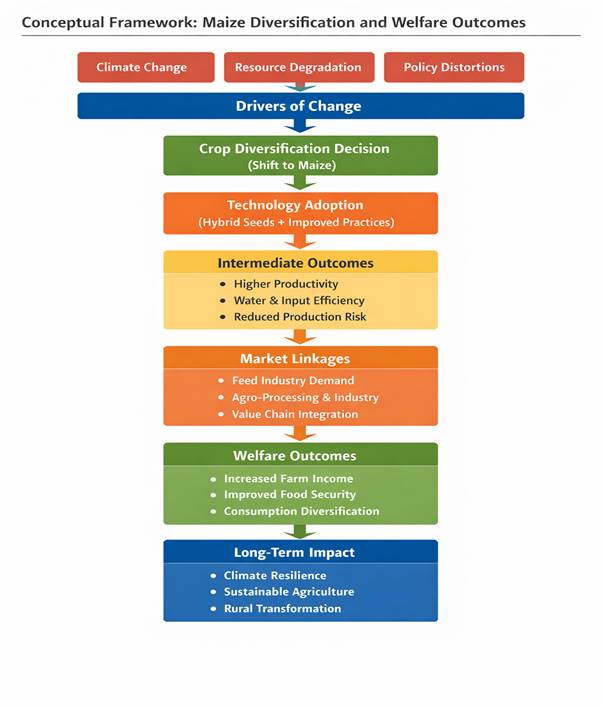
4. Hybrid Technology and Agricultural Transformation
4.1 Role of Hybrid Seeds in Productivity Enhancement
One of the most important factors that has driven productivity growth in global agriculture has been hybrid seed technology, especially for food grains such as maize. Unlike traditional or open-pollinated varieties, hybrid seeds are developed through controlled cross-breeding so that heterosis, or hybrid vigor, can manifest.
The importance of hybrid seeds does not lie solely in their ability to boost productivity; it also lies in their capacity to sustain productivity under uncertain climatic conditions. In the context of global warming, where changes in temperature and precipitation patterns have become crucial factors, the ability to withstand unfavorable climatic conditions is a welcome advantage.
The ability to withstand drought, high temperatures, and pest attacks enables farmers to sustain productivity even under unfavorable conditions, thus reducing the risk of production loss.
From a technological point of view, the use of hybrid seeds embodies innovation where productivity improvement is incorporated into the seed. This is different from other forms of agricultural technologies, where behavioral adaptation is necessary for the farmer to benefit from the technology. As Evenson and Gollin (2003) point out, seed-based technological change has been a key factor in transforming agriculture, especially during the Green Revolution.
In maize cultivation, the productivity gap between hybrid and conventional seeds can be large, especially when the farmer also uses optimal fertilizer and irrigation practices. This interrelationship between seed technology and other factors is an important consideration in evaluating the adoption of hybrid maize seeds.
Moreover, the use of hybrid maize seeds promotes the commercialization of agriculture by enabling the marketing of surplus production. This shift from a subsistence-based to a commercial approach is an essential factor in the structural transformation of agriculture.
4.2 Adoption Challenges and Constraints
Despite the widely acknowledged benefits of hybrid seeds, their adoption remains uneven, especially among smallholder farmers. This is a major area of interest in the theoretical literature on agricultural development, as it is a paradox that, despite their high marginal benefits, these technologies are not universally adopted. Feder et al. (1985) offer a fundamental model for understanding this phenomenon, which is based on the idea that, besides expected benefits, risk, uncertainty, and resource constraints are also important determinants of adoption decisions.
The major limitation for adopting hybrid seeds is financial constraints. It is acknowledged that hybrid seeds are more expensive than traditional seeds, and since their benefits are lost in saved seeds, farmers need to purchase them every year. This is a major limitation for smallholder farmers, who are financially constrained and have poor access to formal credit markets.
The second critical factor is related to what is known as information asymmetry. This is where farmers may not have adequate knowledge about the benefits of using hybrid seeds. However, extension services would be very instrumental in helping to address this situation. However, extension services in most cases have been inadequate to reach all farmers.
The behavioral factor is also an important factor. Most farmers tend to be risk-averse, especially when they are not sure of what to expect. This is because using hybrid seeds is a new practice for them. They would need time to see how these new seeds perform before they start using them. Foster and Rosenzweig (2010) point out how learning externalities would be very instrumental in helping to address this situation. This would mean a gradual process of adoption rather than a rapid one.
In addition to this, constraints related to the institutional and market environment may also impede the adoption. Lack of assured input supply chains may result in a delay in the availability of high-quality seeds. This may further create a negative perception among farmers regarding the hybrid technology. Similarly, the uncertainty related to the output market and the realization of prices may also act as a disincentive for farmers to adopt productivity-increasing inputs.
Moreover, agro-climatic heterogeneity may also pose a challenge for the adoption decision. The performance of hybrid seeds may vary depending on the soil quality, rainfall patterns, and availability of irrigation facilities. In this regard, specific recommendations may be required for different locations as the perceived risks may be high for farmers.
However, addressing the constraints may require a multi-pronged strategy. In the absence of this, the adoption of the hybrid technology may remain limited.
4.3 Welfare Implications of Hybrid Technology Adoption
Adoption of hybrid maize technology, therefore, has significant implications for the welfare of the farmer, which goes beyond the direct productivity benefits. In the most direct sense, increased productivity results in increased output, thereby improving food availability as well as marketable surplus.
Increased market surplus enables the farmer to become a more active participant in the market, which in turn results in increased income levels. This income effect, in fact, lies at the heart of the welfare implications of adopting technology. As income levels increase, individuals are able to command a greater variety of food and other commodities, which in turn results in improved well-being. According to Headey and Ecker (2013), income levels are a key driver in improving nutritional standards, thereby pointing out the indirect route through which productivity benefits can be linked with improved well-being.
Another key dimension is consumption smoothing and risk reduction. By providing stability to yields, the use of hybrid seeds reduces the volatility of income from agriculture. This is particularly relevant today in the context of climate change.
The welfare effects can also be seen from the point of view of asset accumulation and long-term investment. With higher and more stable incomes, the farmer can invest more in productive assets. This can have a long-term impact on productivity growth.
From a macro point of view, the use of this technology would have a positive impact on the structural transformation of the agriculture sector. By providing higher productivity and surplus, the use of this technology would enable the economy to move from a subsistence economy to a market-oriented economy. This would be a major step towards a more efficient economy with greater linkages between the agriculture sector and other sectors.
There are also spillovers that take place at the community level. When there is increased production, it may also lead to the development of markets, agro-processing activities, and employment opportunities. In this case, therefore, the benefits of using hybrid technology are not just for the farmers who adopted the technology but for the economy at large.
However, it should also be noted that the benefits that accrue to farmers are not automatic and may vary for different socio-economic groups. For instance, farmers who have more resources may have a better chance to access new technology and its benefits than their counterparts who have fewer resources; therefore, it is crucial for inclusivity to take center stage for the benefits to accrue fully.
| Dimension | Rice–Wheat System | Maize-Based System |
|---|---|---|
| Water Requirement | Very high (especially paddy cultivation) | Significantly lower |
| Groundwater Impact | Severe depletion in major regions | Relatively sustainable |
| Climate Resilience | Vulnerable to heat and water stress | More resilient (C4 crop advantage) |
| Input Intensity | High dependence on fertilizers, irrigation, and energy | Moderate; more flexible input use |
| Environmental Impact | Soil degradation, methane emissions, stubble burning | Lower emissions, better soil integration |
| Cropping Flexibility | Limited (rigid cropping cycle) | High (can be intercropped/rotated) |
| Market Dependence | Heavily dependent on MSP/procurement | Market-driven (feed + industrial demand) |
| Price Stability | Stable due to government support | Moderately stable due to diversified demand |
| Income Potential | Moderate, often stagnating | Higher potential with hybrid adoption |
| Risk Profile | Lower market risk, higher ecological risk | Balanced (lower ecological, moderate market risk) |
| Value Chain Development | Limited processing linkages | Strong (feed, starch, ethanol industries) |
| Sustainability | Increasingly unsustainable | More sustainable long-term |
5. Policy Implications and Institutional Support
Therefore, the upliftment of the process of maize diversification needs a comprehensive and well-coordinated policy framework that deals with structural issues as well as market inefficiencies. Though the advantages of maize are discussed, the shift towards the cultivation of maize is not a given. It is based on the environment that the farmer is exposed to.
One of the main issues that needs attention is the strengthening of extension services, which is critical for the dissemination of knowledge regarding the use of hybrid seeds and best practices, which will help in the process of adoption. It is critical that extension services shift from a conventional top-down model towards a participatory model, where the knowledge of the farmer is also taken into account. Farmer Producer Organizations (FPOs) are critical stakeholders that need to be considered.
Assuring access to quality inputs, especially hybrid seeds, is another key factor. Availability of certified seeds through assured channels is necessary for generating farmer confidence around the technology. This can be done by strengthening the seed system through coordination between public research systems, seed companies, and the government. Public sector investments in seed R&D can also improve the adaptability of hybrid seeds to local agro-climatic conditions.
Financial inclusion is another key factor for promoting the adoption of the technology. Smallholder farmers often face financial constraints in investing in productivity-enhancing technologies. Improving access to financial services through the formal banking system and other cooperative structures is helping address this issue. In this regard, the use of crop insurance and weather-based insurance products is reducing the risks for farmers and promoting investment in the new technologies.
Therefore, the development of efficient market linkages and value chains is key in realizing the economic potential of maize. Although the demand for maize is high, the market realization for maize tends to be a challenge for the farmers, especially in the feed and industrial sectors.
In order for diversification to be encouraged, policy alignment is key. The existing policy environment, especially the MSP system, has in the past favored rice and wheat, thereby providing a strong incentive for farmers to continue with these crops (Chand, 2017). A gradual policy alignment in favor of other crops, especially maize, can be key in facilitating diversification. This does not mean that support for rice and wheat should be withdrawn, but a balanced policy environment should be established in keeping with the environment and economic conditions.
Public-private partnerships can play a significant role in this regard. Public-private partnerships can speed up innovation, improve input delivery systems, and strengthen value chains.
Lastly, it is also important to take a region-specific approach. The agro-climatic diversity of India suggests that a single framework might not be sufficient. It is important to take a region-specific approach, taking into consideration local resource base, marketing, and farmer preferences, for promoting sustainable diversification.
6. Conclusion
The issues faced by Indian agriculture, from climate change and resource degradation to income volatility, are all interconnected and need systemic interventions from within. The heavy dependence on input-dependent, environmentally unsustainable farming systems is a major area of concern, which calls for a shift towards more robust, diversified farming systems.
The argument of this chapter is that maize-based diversification is a viable and strategic option for addressing the issues facing Indian agriculture. Maize is a crop that possesses several favorable characteristics, including lower water requirements, climate resilience, and strong market demand. These favorable characteristics of maize make it an ideal crop for areas experiencing ecological degradation and declining profitability from traditional farming systems.
The significance of hybrid seed technology is another area of interest, which enhances the value of maize as a diversification crop. This is because hybrid seed technology is known for increasing productivity and income for farmers, besides addressing issues of income volatility. At the same time, participation in diversified value chains can be an opportunity for value addition and rural industrialization.
The role of hybrid seed technology adds another layer of potential for maize as a diversification crop. This is because, through greatly enhanced productivity, the crop enables the farmer to increase earnings and reduce risks. It is also important to note that diversification of the value chain will create opportunities for market participation, value addition, and rural industrialization.
However, the potential for diversification through maize is not automatic, but rather depends on the overall institutional and policy environment. Some of the issues that need to be addressed include input availability, credit, market, and policy issues. This calls for a coordinated policy to address technological innovation, market development, and institutional innovation, among others.
It is also critical to point out that, in the process of diversification, the crop is not meant for total replacement but rather for gradual transformation. This is a critical aspect to consider, given that the farmer's decisions are influenced by risk, culture, and institutional incentives.
In the long term, it can also contribute to a range of development goals, including improved food security, better livelihoods for farmers, and environmental sustainability. It can also play a critical role in climate adaptation by managing natural resources and making farming systems more resilient.
In conclusion, it is evident that maize is more than just an alternative crop; it is a strategic tool for transforming Indian agriculture into a more sustainable, efficient, and resilient future. This can be done by taking a more holistic approach, ensuring that the benefits of transformation are shared across farming communities.
References
Birthal, P. S., & Negi, D. S. (2012). Livestock for higher, sustainable agricultural growth in India. Agricultural Economics Research Review, 25(2), 185–198.
Birthal, P. S., Roy, D., & Negi, D. S. (2015). Assessing the impact of crop diversification on farm income and employment in India. Food Policy, 53, 1–13. https://doi.org/10.1016/j.foodpol.2015.03.002
Chand, R. (2017). Doubling farmers’ income: Rationale, strategy, prospects and action plan. NITI Aayog Working Paper. Government of India. https://www.niti.gov.in
Ellis, F. (2000). Rural livelihoods and diversity in developing countries. Oxford University Press.
Evenson, R. E., & Gollin, D. (2003). Assessing the impact of the Green Revolution, 1960 to 2000. Science, 300(5620), 758–762. https://doi.org/10.1126/science.1078710
Food and Agriculture Organization. (2021). FAOSTAT statistical database. https://www.fao.org/faostat/
Feder, G., Just, R. E., & Zilberman, D. (1985). Adoption of agricultural innovations in developing countries: A survey. Economic Development and Cultural Change, 33(2), 255–298. https://doi.org/10.1086/451461
Foster, A. D., & Rosenzweig, M. R. (2010). Microeconomics of technology adoption. Annual Review of Economics, 2(1), 395–424. https://doi.org/10.1146/annurev.economics.102308.124433
Hatfield, J. L., & Prueger, J. H. (2015). Temperature extremes: Effect on plant growth and development. Weather and Climate Extremes, 10, 4–10. https://doi.org/10.1016/j.wace.2015.08.001
Headey, D., & Ecker, O. (2013). Rethinking the measurement of food security: From first principles to best practice. Food Security, 5(3), 327–343. https://doi.org/10.1007/s12571-013-0253-0
Intergovernmental Panel on Climate Change. (2022). Climate change 2022: Impacts, adaptation, and vulnerability. Cambridge University Press. https://www.ipcc.ch/report/ar6/wg2/
Jones, A. D., Shrinivas, A., & Bezner-Kerr, R. (2014). Farm production diversity is associated with greater household dietary diversity in Malawi. Food Policy, 46, 1–12. https://doi.org/10.1016/j.foodpol.2014.02.001
Lin, B. B. (2011). Resilience in agriculture through crop diversification: Adaptive management for environmental change. BioScience, 61(3), 183–193. https://doi.org/10.1525/bio.2011.61.3.4
Pingali, P. L. (2012). Green Revolution: Impacts, limits, and the path ahead. Proceedings of the National Academy of Sciences, 109(31), 12302–12308. https://doi.org/10.1073/pnas.0912953109
Pretty, J., Benton, T. G., Bharucha, Z. P., Dicks, L. V., Flora, C. B., Godfray, H. C. J., Goulson, D., Hartley, S., Lampkin, N., Morris, C., Pierzynski, G., Prasad, P. V. V., Reganold, J., Rockström, J., Smith, P., Thorne, P., & Wratten, S. (2018). Global assessment of agricultural system redesign for sustainable intensification. Nature Sustainability, 1(8), 441–446. https://doi.org/10.1038/s41893-018-0114-0
Rodell, M., Velicogna, I., & Famiglietti, J. S. (2009). Satellite-based estimates of groundwater depletion in India. Nature, 460(7258), 999–1002. https://doi.org/10.1038/nature08238
Smale, M., Byerlee, D., & Jayne, T. (2011). Maize revolutions in sub-Saharan Africa (World Bank Policy Research Working Paper No. 5659). https://doi.org/10.1596/1813-9450-5659